
NetZero Citizen
Home
Transition
Decarbonization
Write to us
NetZero Citizen
How Does China Build Nuclear So Fast? Can You Do it Too?

How Does China Build Nuclear So Fast? Can You Do it Too?

Karim Megherbi

Original source

A long, meandering look at a recent nuclear power plant connected to the grid in China, and what lessons it holds for other countries considering nuclear.

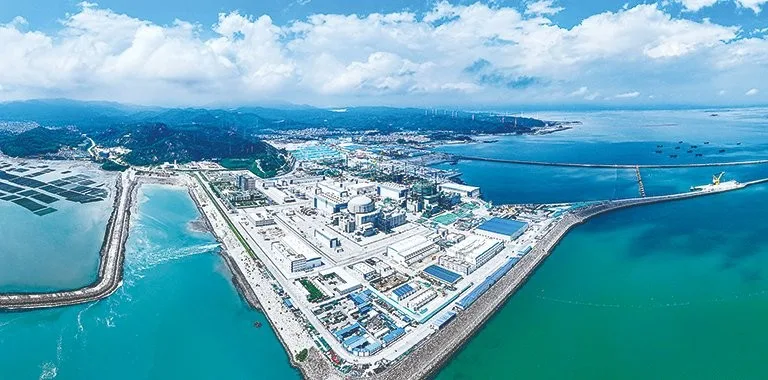
Last week, on the morning of November 28, China's newest nuclear power plant, a Hualong One reactor at the Zhangzhou site in Fujian, connected to the grid, just 61 months after starting construction. That's five years plus one month. That's very fast. How did it happen?

Background

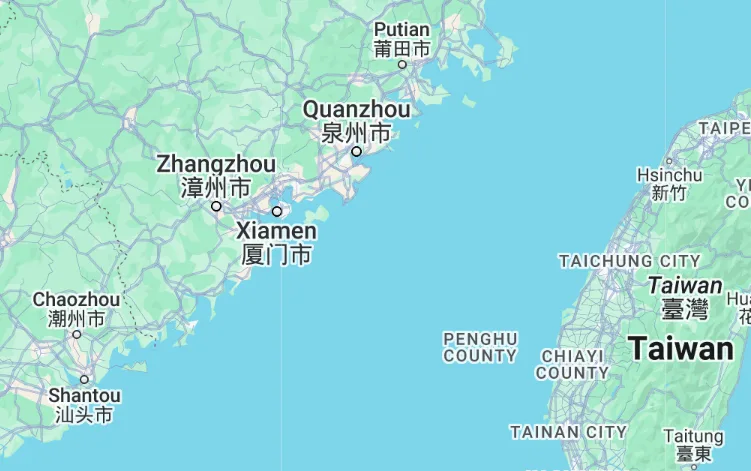
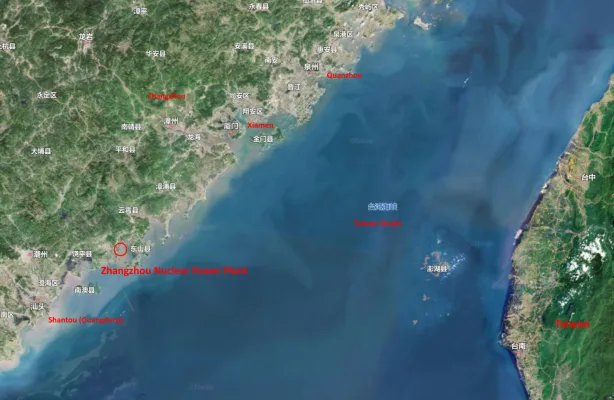
For geographic context, Zhangzhou City sits west of the much-more-famous Xiamen City, just across the straits from Taiwan. Combined, the coastal Zhangzhou-Xiamen-Quanzhou metropolitan triangle has a population of about 19 million people, representing just shy of half of Fujian's 40 trillion CNY GDP (2024 estimate).
Contenu de l’article

Zhangzhou is the third nuclear power plant in Fujian, following Fuqing and Ningde. All three sites are planned to eventually host six GW-level reactors, for a total of 18 GW of nuclear. There is also a 600 MW sodium-cooled reactor under development at Xiapu. Longer-term, Fujian has planned sites for more development at Sanming and Lianjiang (连江, not to be confused with the 廉江 site in Guangdong). Fujian has some of the weakest renewable resources in the country and has leaned heavily into nuclear to offset/replace coal.
Contenu de l’article

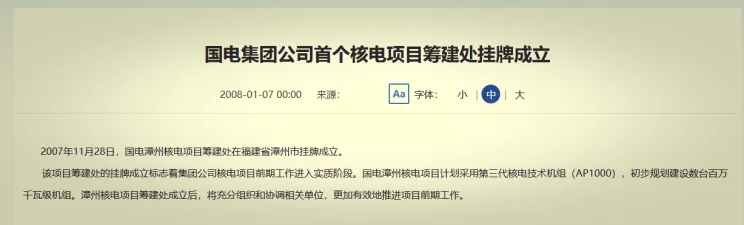
The first thing to know about Zhangzhou NPP is it's NOT a new reactor. Actually this thing has been planned for ages. The first mention I can find of it goes back to 2007, when Guodian (one of the plant owners) set up a Project Office in Zhangzhou.

We learn from this very early notice that the site plans to use AP1000 reactors imported from Westinghouse. Keep in mind, the Westinghouse AP1000 export deal had basically JUST been signed at this point. The first unit at Sanmen wasn't even under construction yet. This was a wild time...there were dozens of AP1000s sites all across China being planned all at once.
Contenu de l’article

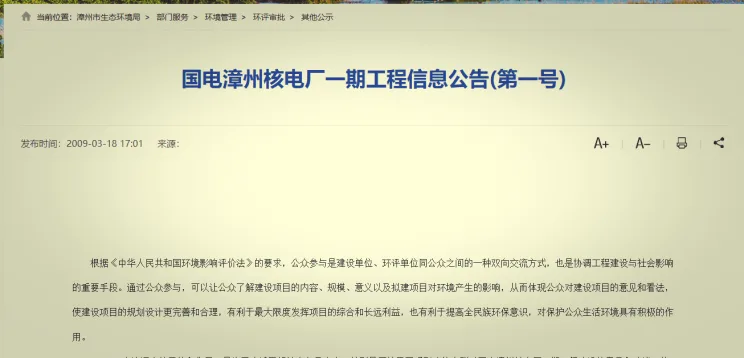
In March 2009, the Guodian Zhangzhou Project Office publishes its first public consultation notice. It has contracted the Shanghai Nuclear Engineering Research and Design Institute (SNERDI) to do an environmental impact assessment report for the site selection phase.
Contenu de l’article

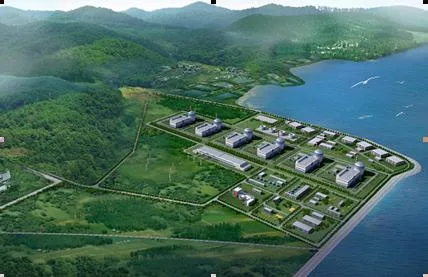
We learn they plan to pour concrete in August 2011 on the first of six reactors, across two phases, with grid connection targeted for August 2016.
Contenu de l’article

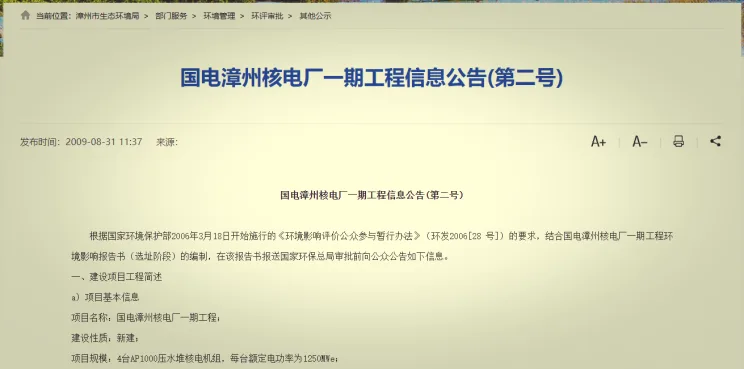
By August 2009, the second public consultation letter is issued, summarizing the results from the environmental impact assessment and feasibility report, which both point to the site's suitability for a nuclear power plant with at least 4 AP1000 reactors.
Contenu de l’article

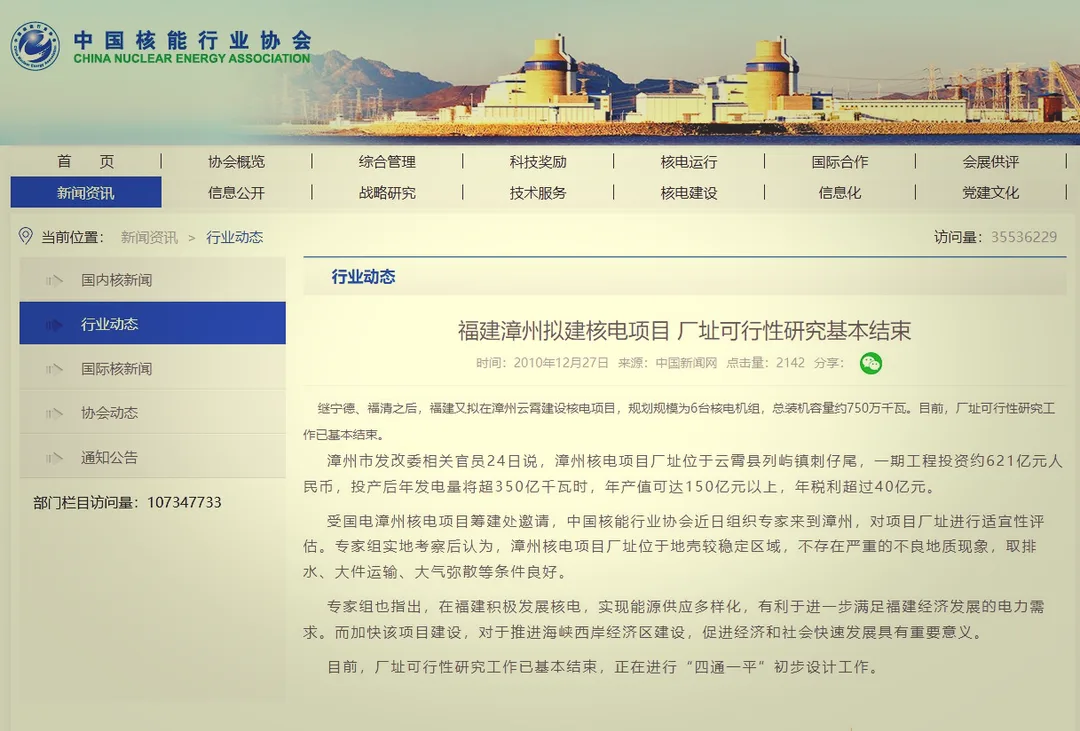
Following a Project Site Suitability Assessment Meeting in December 2010, China's Nuclear Energy Association announces that the site selection phase is "basically complete", and Guodian will now proceed to pre-construction work (site leveling, connecting utilities, etc.)
Contenu de l’article

Diaster Strikes

In March, 2011, the earthquake, tsunami and subsequent nuclear accident in Fukushima, Japan derail everything. All site approvals are frozen and construction work at all Chinese sites is halted. Incidentally, I have just arrived in Beijing for my study abroad in college.I see the accident on the news.

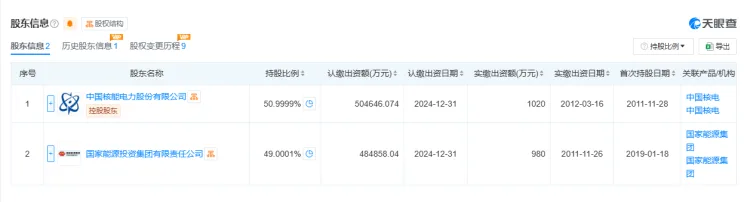
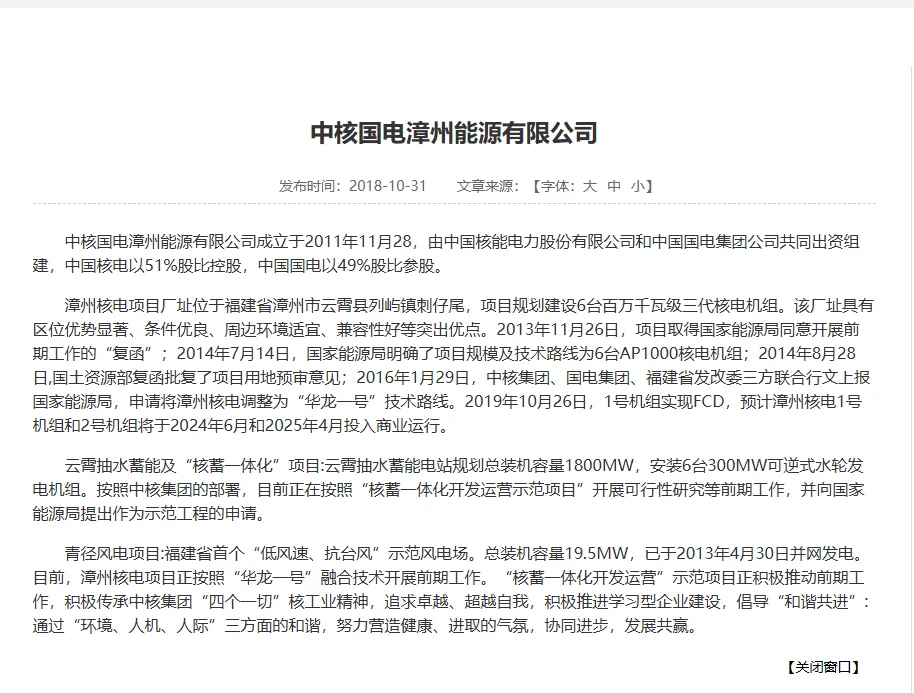
At the end of 2011, the CNNP Guodian Zhangzhou Energy Company is formally established, with Guodian as the minority shareholder (49%) to CNNC (51%). Clearly they are expecting to move ahead with this project, even if things are stalled for the moment.
Contenu de l’article

Everything stays frozen in place for about 2 years, across most of the industry. The NEA/NNSA are trying to figure out how to proceed. Nobody is building anything.

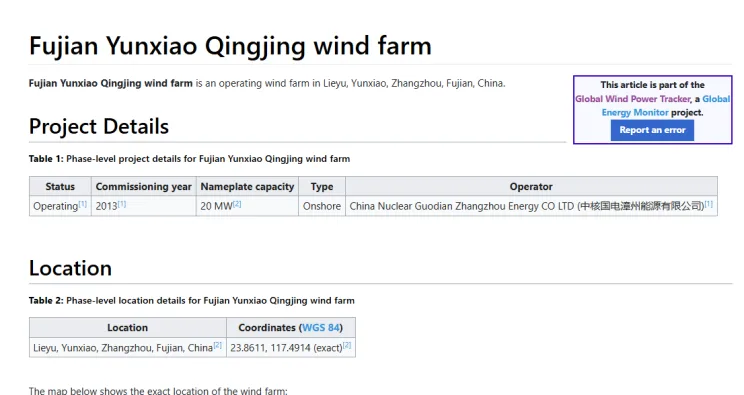
Well...nothing nuclear anyway. In 2013, CNNP Guodian Zhangzhou Energy Company, perhaps out of pure boredom, builds the 20 MW Qingjing offshore wind farm, just off the coast of their stalled nuclear power plant.
Contenu de l’article

Things start moving again at the end of 2013 though. In November, the NEA gives Zhangzhou approval to go ahead with preliminary site work. In August 2014, a new environmental impact report is released for public comment (I suppose the report was redone following Fukushima). Later that month, the Ministry of Land and Natural Resources grants formal approval for the land to be used for a nuclear power plant.

Another important thing that happens in China's nuclear sector in summer 2014 - a guy named David Fishman takes a job in Shanghai as a China nuclear power analyst and market consultant. A huge, monumental milestone, if you think about it.

News is slow into 2015. China Energy Network reports that the project is now in its "initiation stage" and the project owner submits its Phase 1 Facilities Safety Analysis Report to the national regulator for review. At this point, the site is STILL supposed to be 6 AP1000s.

AP1000 Out - Hualong One In

A bombshell arrives in January 2016, when CNNC, Guodian, and the Fujian Development and Reform Commission formally petition the National Energy Administration (NEA) to use domestic Hualong One reactor technology, instead of the long-planned AP1000s.

At this point, the Hualong One is under construction at two sites in Fujian and Guangxi, respectively, with no operating reference reactor. The AP1000 is under construction at two sites in Zhejiang and Shandong, respectively, also with no operating reference reactor.

The reactor change application is approved in October 2016, when Zhangzhou is formally cleared to move ahead building Hualong One reactors at Unit 1 and 2. A construction date is not set.

Chinese media The Paper summarizes the situation in this excerpt [translation mine]:

"Zhangzhou was originally planning to build AP1000 PWRs imported from the United States. The AP1000 is an advanced, passively safe PWR technology imported from the USA's Westinghouse, with the construction of the world's first plant at Sanmen in Zhejiang Province beginning in March 2009. The project has been delayed due to a series of difficulties in design, manufacturing, and construction that arose in the course of this first-of-a-kind reactor. This poor progress has also blocked the approval of subsequent AP1000 projects, of which the Zhangzhou project was one. In January 2016, CNNC, Guodian, and the Fujian DRC jointly submitted a letter to the NEA to change the plant to the Hualong One technology path."

Things go quiet again for another two years. No new reactors can begin construction until their reference plants are completed. However, CNNC plays a neat trick, and gets Zhangzhou Units 1 and 2 designated as demonstration units for "Hualong One batch construction", which makes them unique reactors, and so they don't need to wait for the reference reactors to finish construction. In October 2018, they are assigned a construction start date of October 2019 (this trick allows CNNC to start building these reactors a year earlier than would have been possible had they been forced to wait for the reference reactors at Fuqing to finish).
Contenu de l’article

Construction Starts...Finally!

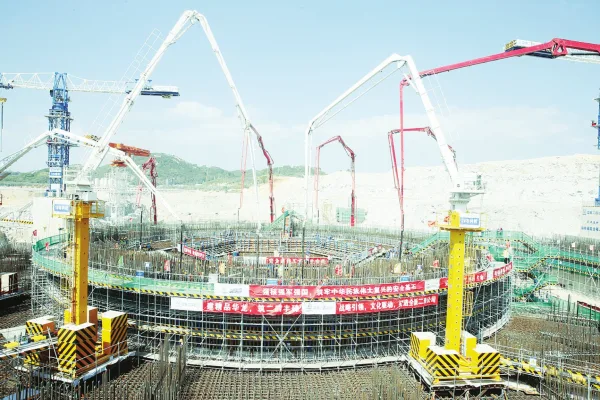
On October 17, 2019, Zhangzhou Unit 1 pours its first barrel of safety-related concrete (First Concrete Date, or FCD). Construction, finally!

It has taken nearly 10 years to get to this point, although to be fair, a lot of time was spent waiting and duplicating work previously completed. Zhangzhou has finally emerged from the tedium of regulatory red tape and is ready to show what it can really do.
Contenu de l’article

From this point on, China finally gets to demonstrate what it does better than anyone else: building really big, really expensive, really complex infrastructure, really goddamn fast.

Just one year later, on November 3, 2020, CNNC announces all sub-surface work is completed and the ground-level foundation slab has been poured.

Recommandé par LinkedIn
Edition 21: Nuclear Pulse - Week 23, 2025 Edition 21: Nuclear Pulse - Week 23, 2025 Ruan Steyn, MBA, MSc, PMP il y a 1 an The U.S.-China Nuclear Race: How America Fell Behind and China Took the Lead – The "37 to 0" Shift The U.S.-China Nuclear Race: How America Fell Behind… Mike L il y a 6 jours U.K. to Be First European Producer of Advanced Nuclear Fuel U.K. to Be First European Producer of Advanced Nuclear… Industrial Info Resources il y a 2 ans
Contenu de l’article

The Zhangzhou company chairman is quoted in local news saying that most of his 10,000 construction employees opted to remain on the site and work through the early stages of the pandemic, rather than go home for the Chinese New Year in spring 2020.

That's...a lot of people.

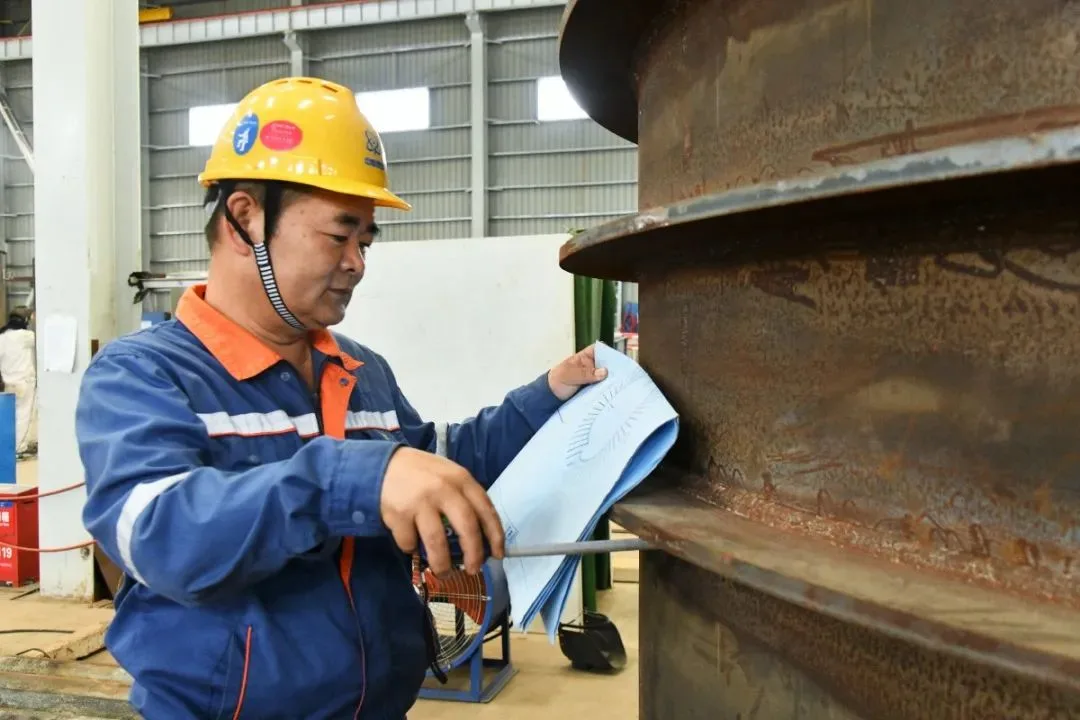
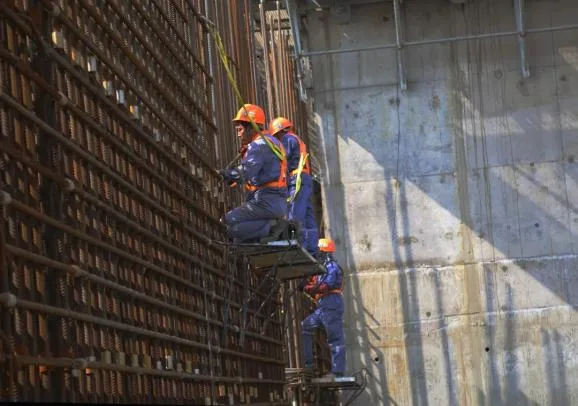
In April 2021, The Paper does a feature on Zhangzhou's metalworking team leader, Mr. Zhang Guobin, a 37-year construction veteran with 13 years of nuclear metalworking experience across 3 sites. He manages of an onsite team of 80 people who do nothing but bend and shape metal for Zhangzhou.

He says at the start of the project, he had just 12 guys, so they had to work 12-hour relay shifts to keep production going 24/7, but things are a little more relaxed now as the team has grown.
Contenu de l’article

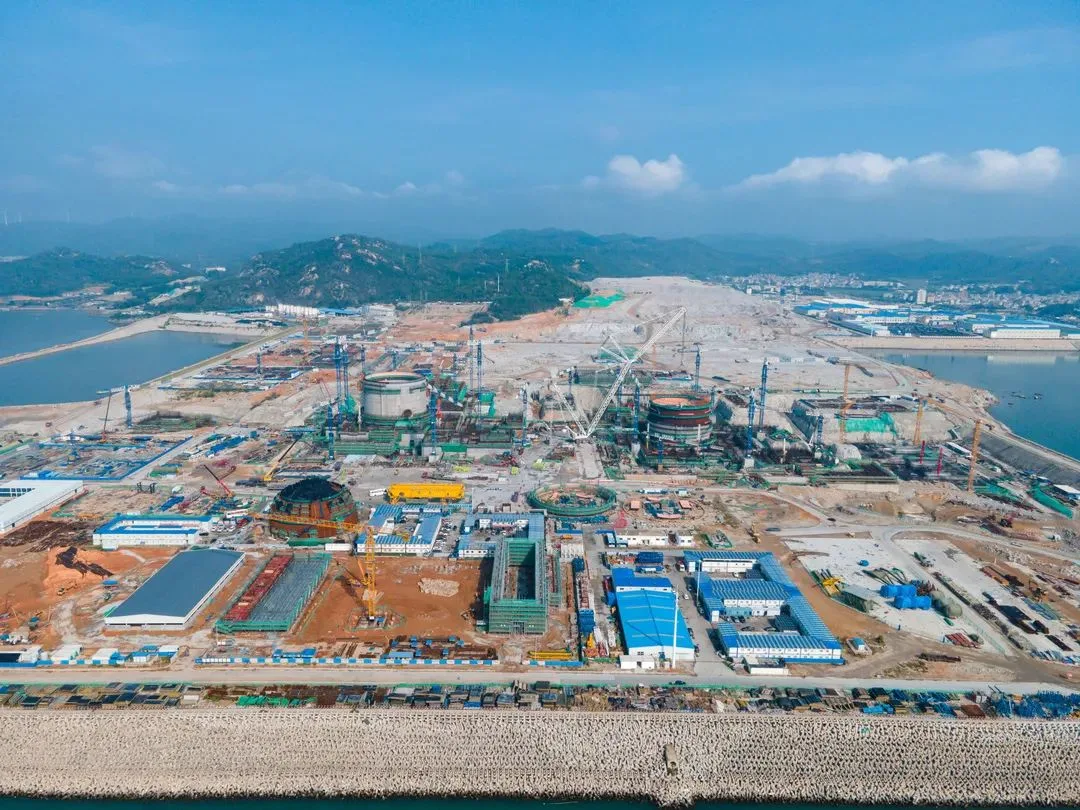
By August 2021, the concrete pours for the internal structure of Unit 1 are complete.

From the outside, the progress is rapid and visible. Unit 1 is on the left. The containment steel liner is being assembled nearby.
Contenu de l’article

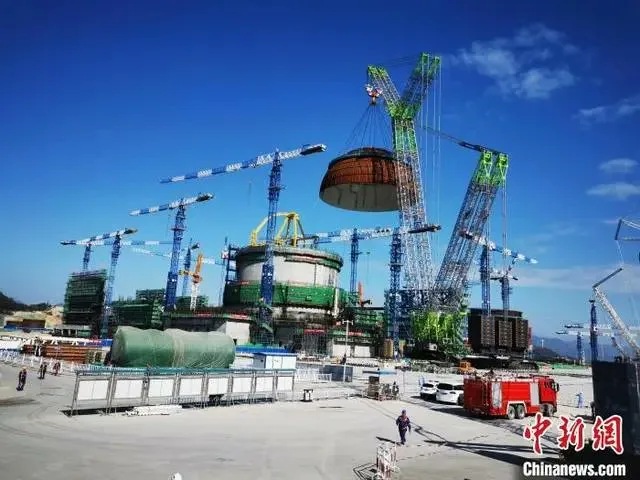
On October 27, 2021, the steel containment liner is lifted and installed into place. At this point all the major components of the Nuclear Steam Supply Systsem (NSSS) have been installed (reactor pressure vessel, steam generators, pressurizers, primary piping, etc.). It has been just 24 months since the FCD.
Contenu de l’article

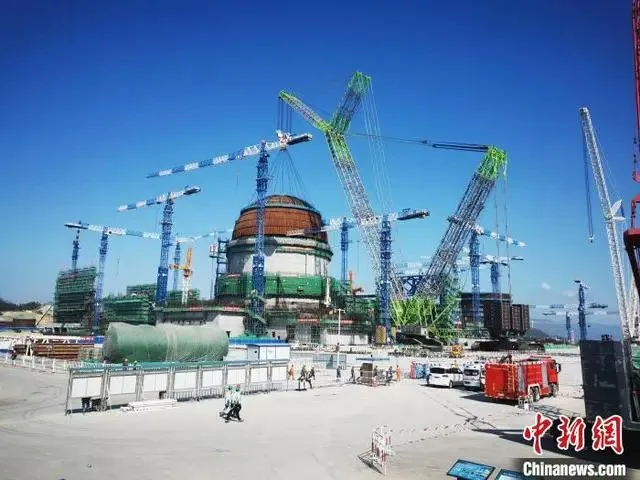
As a short side tangent, the Hualong One uses an advanced construction process for the nuclear sector called modularized construction, where large components are prefabricated on- or off-site and then lifted into place with these ultra-heavy capacity fixed-based ring cranes. You can see the ring crane in position halfway between Units 1 and Unit 2, as it serves the construction needs of both units. This crane itself is so large that it needs to be assembled with the help of other, smaller cranes.
Contenu de l’article

This modularized construction approach was pionered by Westinghouse, who designed it into the AP1000, and who designed and procured these ultra-heavy capacity cranes for their VC Summer and Vogtle projects in the US. Originally they were supposed to use them in their China projects at Sanmen and Haiyang as well, but a failure in communication/design/ planning led to those sites not having space for a ring crane included in their site blueprints. At the Sanmen and Haiyang sites, a large roller crane was used instead.
Contenu de l’article

In theory, modularized construction accelerates the construction schedule greatly, although this benefit was not realized at any of the AP1000 sites. However, Zhangzhou Unit 1 has benefited from the mistakes of the past, and has incorporated modularized construction with its own domestic crane technology. The green highlights on this ultra heavy capacity crane identify the Chinese supplier as Zoomlion.

Let's get back to construction. The next big news comes in June 2022, when the containment shell steel pre-tensioning work is completed.
Contenu de l’article

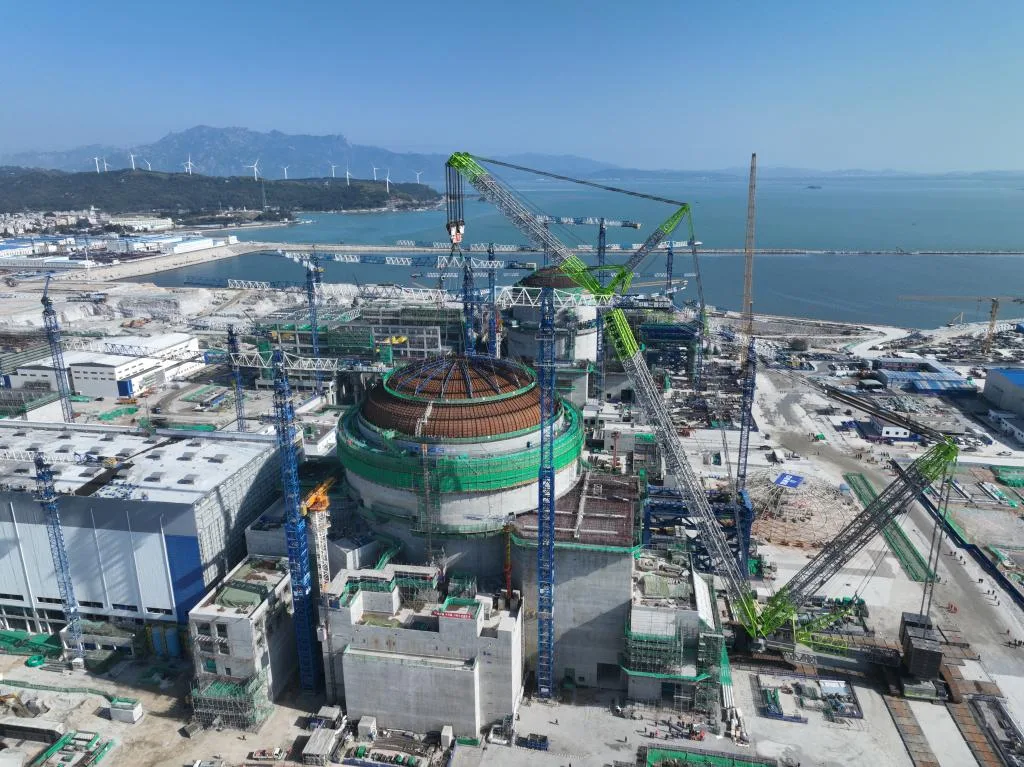
On February 17, 2023, the containment building is "capped off" with the top module lifted and dropped into place. We are now deep into the installation and testing/inspection phase, and most of the civil construction work has concluded. It has been 40 months since FCD. Most of the work is inside the plant now, and from the outside, it looks mostly complete.
Contenu de l’article

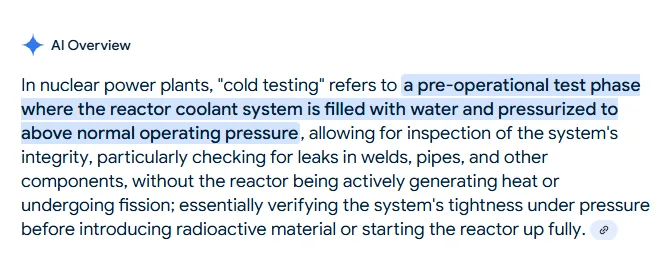
In November 2023, the "cold testing" at Zhangzhou 1 is reported to be complete and the plant is considered to have completed the installation phase, instead entering the commissioning phase. It has been just over 48 months since FCD.
Contenu de l’article

Commissioning

The next big task/milestone was "hot testing", which took about 6 months and is reported to be finished in May 2024. This can sometimes take a long time, if issues are encountered, but apparently Zhangzhou 1 didn't have any.

With hot testing completed, the path was cleared for the first batch of uranium fuel to be loaded into the reactor core, pending regulatory approval.

The regulator approved Zhangzhou's first fuel load on October 12, 2024. In China, the fuel load approval IS the operations permit. They're saying "load up and fire away" (metaphorically of course).

Following that, the plant smoothly moved to first criticality, first power output, and grid connection by the end of November 2024. All of these things can sometimes requires months or years of troubleshooting, if issues are encountered, but Zhangzhou apparently saw smooth sailing.

After 168 hours (7 days) it will be declared "fully commercially operational".

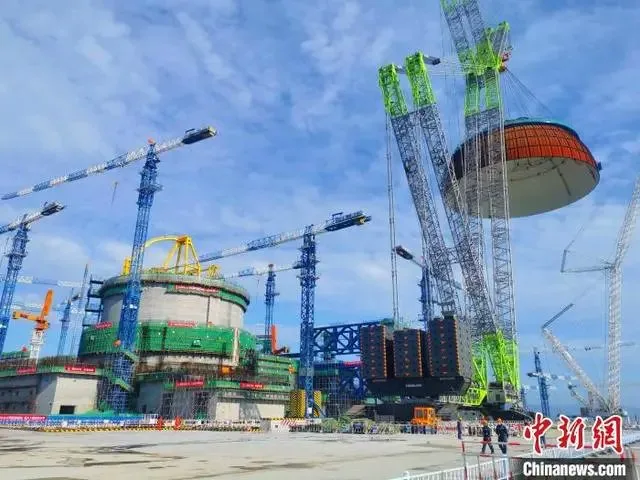
In the image below, Zhangzhou 2 is on the right, about 6-12 months behind Zhangzhou 1. Zhangzhou Units 3 and 4 are also visible in the background, in the early stages of construction.

Conclusions

So...is China actually fast at building nuclear reactors, or it is slow? What does it all mean?

Clearly China doesn't have a shorter pre-construction cycle compared to other countries around the world. If anything, it's longer, more tedious, and even MORE bureaucratic than its peers. Hopefully Zhangzhou is an outlier, because 10 years of pre-construction, only to take another two years to pour concrete after getting a construction permit, is absolutely brutal. From concept to grid connect, Zhangzhou 1 needed 17 years. Granted, probably five years of that can be attributed to Fukushima-related slowdowns and weirdness about demonstration reactors. But it's still a lot of time.

On the other hand, even if you don't know much about nuclear development at all, you should be able to identify the Construction and Installation phases of Zhangzhou 1 were Extremely Goddamn Fast. They went from a leveled site to a completed shell in less than 36 months, with the major work civil construction work completed in just 24.

When you borrow 10 or 20 billion dollars to to build these things, the interest payments are insane. Time is literally money. Even at very favorable interest rates, every single day over the construction schedule is a million dollars of interest...and a million dollars of lost power sales. Project workflows are usually defined in days, but sometimes in terms of hours or even minutes. Every bit of time saved matters.

China builds these things by throwing 10,000 people at the program, like ants working together to eat an elephant. There probably a dozen different construction companies onsite at any single time, pre-fabbing different components (often sister companies or subsidiaries of the project owner). There may be more people than are needed for certain tasks, and people are getting paid to do nothing at certain times. That's preferable than having not enough people to do a certain task, and ending up losing a day on your workflow. Every day is a million bucks in interest and a million bucks in lost power sales, remember!

Every skilled laborer onsite has been doing this job, and just this job, for years, maybe decades. And yeah, they'll do a 12-hour 2-man relay to ensure 24h production of metal parts... Every team leader, every shift boss, is a veteran of multiple recent reactor builds. China has the ability to supply specialized labor at mass scale. And if there are issues during installation or comissioning...the manufacturer is in the industrial park down the street, or in the neighboring province. They'll prototype a new part, iterate it a few times, and get you the fixed piece shipped to the site within weeks, or days...

Yes, Chinese regulatory red tape is nasty, just like it probably is in your country too. Zhangzhou got screwed over by the timing on the Fukushima accident and all of its downstream effects - this won't be a factor again in the future. The 17 years could probably be more like 12, or maybe even 10. After all, China is planning to build 8-10 reactors each year, every year, for the next three decades. Surely they're going to get that part trimmed down as much as possible. But I struggle to imagine how they're going to get the construction part optimized any more than it already is. 61 months in 2024 is already astounding.

So, for countries that are looking at what China does and thinking: if China does it, surely we can do it too, right? Let me ask you:

Putting aside whether you can successfully navigate your country's regulatory red tape, and get that pre-construction phase down to just 5-7 years, like China should be able to, and putting aside whether your commercial banks can offer developers loans at 2% interest, like China has...

Do you have thousands of experienced craftspeople to throw at the project, willing to work 12-hour relay shifts for 24h production?

Do you have dozens or hundreds production team leaders who have spend their entire career doing one specialized task nuclear power plant construction?

Do you have industrial producers able to troubleshoot, prototype, iterate, and delivery a revised part in days or weeks?

These are the hard questions you must be asking yourself, as you try to decide whether China's gold standard 61-month construction schedule is proof that nuclear power could also work for your country...or whether it's evidence that it does not. Make sure you're honest with yourself. That's not to say 61 months is necessary for nuclear to be economic in your country, but the further you depart from it, surely the less sense it will make. At some point, it'll stop making sense at all.

That's all for this time. If you enjoyed this content, please give me a follow, and also check out The Lantau Group, a specialist consultancy focused on the Asia-Pacific energy sector. I'm based in The Lantau Group's Shanghai office, where I helps companies make crucial decisions about their energy strategy in China, including power tariff forecasts, budget forecasts, and sustainability planning for power customers, as well as transaction/commercial support for power infrastructure developers, lenders and investors.

A long, meandering look at a recent nuclear power plant connected to the grid in China, and what lessons it holds for other countries considering nuclear.

Last week, on the morning of November 28, China's newest nuclear power plant, a Hualong One reactor at the Zhangzhou site in Fujian, connected to the grid, just 61 months after starting construction. That's five years plus one month. That's very fast. How did it happen?

Background

For geographic context, Zhangzhou City sits west of the much-more-famous Xiamen City, just across the straits from Taiwan. Combined, the coastal Zhangzhou-Xiamen-Quanzhou metropolitan triangle has a population of about 19 million people, representing just shy of half of Fujian's 40 trillion CNY GDP (2024 estimate).

Contenu de l’article

Zhangzhou is the third nuclear power plant in Fujian, following Fuqing and Ningde. All three sites are planned to eventually host six GW-level reactors, for a total of 18 GW of nuclear. There is also a 600 MW sodium-cooled reactor under development at Xiapu. Longer-term, Fujian has planned sites for more development at Sanming and Lianjiang (连江, not to be confused with the 廉江 site in Guangdong). Fujian has some of the weakest renewable resources in the country and has leaned heavily into nuclear to offset/replace coal.

Contenu de l’article

The first thing to know about Zhangzhou NPP is it's NOT a new reactor. Actually this thing has been planned for ages. The first mention I can find of it goes back to 2007, when Guodian (one of the plant owners) set up a Project Office in Zhangzhou.

We learn from this very early notice that the site plans to use AP1000 reactors imported from Westinghouse. Keep in mind, the Westinghouse AP1000 export deal had basically JUST been signed at this point. The first unit at Sanmen wasn't even under construction yet. This was a wild time...there were dozens of AP1000s sites all across China being planned all at once.

Contenu de l’article

In March 2009, the Guodian Zhangzhou Project Office publishes its first public consultation notice. It has contracted the Shanghai Nuclear Engineering Research and Design Institute (SNERDI) to do an environmental impact assessment report for the site selection phase.

Contenu de l’article

We learn they plan to pour concrete in August 2011 on the first of six reactors, across two phases, with grid connection targeted for August 2016.

Contenu de l’article

By August 2009, the second public consultation letter is issued, summarizing the results from the environmental impact assessment and feasibility report, which both point to the site's suitability for a nuclear power plant with at least 4 AP1000 reactors.

Contenu de l’article

Following a Project Site Suitability Assessment Meeting in December 2010, China's Nuclear Energy Association announces that the site selection phase is "basically complete", and Guodian will now proceed to pre-construction work (site leveling, connecting utilities, etc.)

Contenu de l’article

Diaster Strikes

In March, 2011, the earthquake, tsunami and subsequent nuclear accident in Fukushima, Japan derail everything. All site approvals are frozen and construction work at all Chinese sites is halted. Incidentally, I have just arrived in Beijing for my study abroad in college.I see the accident on the news.

At the end of 2011, the CNNP Guodian Zhangzhou Energy Company is formally established, with Guodian as the minority shareholder (49%) to CNNC (51%). Clearly they are expecting to move ahead with this project, even if things are stalled for the moment.

Contenu de l’article

Everything stays frozen in place for about 2 years, across most of the industry. The NEA/NNSA are trying to figure out how to proceed. Nobody is building anything.

Well...nothing nuclear anyway. In 2013, CNNP Guodian Zhangzhou Energy Company, perhaps out of pure boredom, builds the 20 MW Qingjing offshore wind farm, just off the coast of their stalled nuclear power plant.

Contenu de l’article

Things start moving again at the end of 2013 though. In November, the NEA gives Zhangzhou approval to go ahead with preliminary site work. In August 2014, a new environmental impact report is released for public comment (I suppose the report was redone following Fukushima). Later that month, the Ministry of Land and Natural Resources grants formal approval for the land to be used for a nuclear power plant.

Another important thing that happens in China's nuclear sector in summer 2014 - a guy named David Fishman takes a job in Shanghai as a China nuclear power analyst and market consultant. A huge, monumental milestone, if you think about it.

News is slow into 2015. China Energy Network reports that the project is now in its "initiation stage" and the project owner submits its Phase 1 Facilities Safety Analysis Report to the national regulator for review. At this point, the site is STILL supposed to be 6 AP1000s.

AP1000 Out - Hualong One In

A bombshell arrives in January 2016, when CNNC, Guodian, and the Fujian Development and Reform Commission formally petition the National Energy Administration (NEA) to use domestic Hualong One reactor technology, instead of the long-planned AP1000s.

At this point, the Hualong One is under construction at two sites in Fujian and Guangxi, respectively, with no operating reference reactor. The AP1000 is under construction at two sites in Zhejiang and Shandong, respectively, also with no operating reference reactor.

The reactor change application is approved in October 2016, when Zhangzhou is formally cleared to move ahead building Hualong One reactors at Unit 1 and 2. A construction date is not set.

Chinese media The Paper summarizes the situation in this excerpt [translation mine]:

"Zhangzhou was originally planning to build AP1000 PWRs imported from the United States. The AP1000 is an advanced, passively safe PWR technology imported from the USA's Westinghouse, with the construction of the world's first plant at Sanmen in Zhejiang Province beginning in March 2009. The project has been delayed due to a series of difficulties in design, manufacturing, and construction that arose in the course of this first-of-a-kind reactor. This poor progress has also blocked the approval of subsequent AP1000 projects, of which the Zhangzhou project was one. In January 2016, CNNC, Guodian, and the Fujian DRC jointly submitted a letter to the NEA to change the plant to the Hualong One technology path."

Things go quiet again for another two years. No new reactors can begin construction until their reference plants are completed. However, CNNC plays a neat trick, and gets Zhangzhou Units 1 and 2 designated as demonstration units for "Hualong One batch construction", which makes them unique reactors, and so they don't need to wait for the reference reactors to finish construction. In October 2018, they are assigned a construction start date of October 2019 (this trick allows CNNC to start building these reactors a year earlier than would have been possible had they been forced to wait for the reference reactors at Fuqing to finish).

Contenu de l’article

Construction Starts...Finally!

On October 17, 2019, Zhangzhou Unit 1 pours its first barrel of safety-related concrete (First Concrete Date, or FCD). Construction, finally!

It has taken nearly 10 years to get to this point, although to be fair, a lot of time was spent waiting and duplicating work previously completed. Zhangzhou has finally emerged from the tedium of regulatory red tape and is ready to show what it can really do.

Contenu de l’article

From this point on, China finally gets to demonstrate what it does better than anyone else: building really big, really expensive, really complex infrastructure, really goddamn fast.

Just one year later, on November 3, 2020, CNNC announces all sub-surface work is completed and the ground-level foundation slab has been poured.

Recommandé par LinkedIn

Edition 21: Nuclear Pulse - Week 23, 2025 Edition 21: Nuclear Pulse - Week 23, 2025 Ruan Steyn, MBA, MSc, PMP il y a 1 an The U.S.-China Nuclear Race: How America Fell Behind and China Took the Lead – The "37 to 0" Shift The U.S.-China Nuclear Race: How America Fell Behind… Mike L il y a 6 jours U.K. to Be First European Producer of Advanced Nuclear Fuel U.K. to Be First European Producer of Advanced Nuclear… Industrial Info Resources il y a 2 ans
Contenu de l’article

The Zhangzhou company chairman is quoted in local news saying that most of his 10,000 construction employees opted to remain on the site and work through the early stages of the pandemic, rather than go home for the Chinese New Year in spring 2020.

That's...a lot of people.

In April 2021, The Paper does a feature on Zhangzhou's metalworking team leader, Mr. Zhang Guobin, a 37-year construction veteran with 13 years of nuclear metalworking experience across 3 sites. He manages of an onsite team of 80 people who do nothing but bend and shape metal for Zhangzhou.

He says at the start of the project, he had just 12 guys, so they had to work 12-hour relay shifts to keep production going 24/7, but things are a little more relaxed now as the team has grown.

Contenu de l’article

By August 2021, the concrete pours for the internal structure of Unit 1 are complete.

From the outside, the progress is rapid and visible. Unit 1 is on the left. The containment steel liner is being assembled nearby.

Contenu de l’article

On October 27, 2021, the steel containment liner is lifted and installed into place. At this point all the major components of the Nuclear Steam Supply Systsem (NSSS) have been installed (reactor pressure vessel, steam generators, pressurizers, primary piping, etc.). It has been just 24 months since the FCD.

Contenu de l’article

As a short side tangent, the Hualong One uses an advanced construction process for the nuclear sector called modularized construction, where large components are prefabricated on- or off-site and then lifted into place with these ultra-heavy capacity fixed-based ring cranes. You can see the ring crane in position halfway between Units 1 and Unit 2, as it serves the construction needs of both units. This crane itself is so large that it needs to be assembled with the help of other, smaller cranes.

Contenu de l’article

This modularized construction approach was pionered by Westinghouse, who designed it into the AP1000, and who designed and procured these ultra-heavy capacity cranes for their VC Summer and Vogtle projects in the US. Originally they were supposed to use them in their China projects at Sanmen and Haiyang as well, but a failure in communication/design/ planning led to those sites not having space for a ring crane included in their site blueprints. At the Sanmen and Haiyang sites, a large roller crane was used instead.

Contenu de l’article

In theory, modularized construction accelerates the construction schedule greatly, although this benefit was not realized at any of the AP1000 sites. However, Zhangzhou Unit 1 has benefited from the mistakes of the past, and has incorporated modularized construction with its own domestic crane technology. The green highlights on this ultra heavy capacity crane identify the Chinese supplier as Zoomlion.

Let's get back to construction. The next big news comes in June 2022, when the containment shell steel pre-tensioning work is completed.

Contenu de l’article

On February 17, 2023, the containment building is "capped off" with the top module lifted and dropped into place. We are now deep into the installation and testing/inspection phase, and most of the civil construction work has concluded. It has been 40 months since FCD. Most of the work is inside the plant now, and from the outside, it looks mostly complete.

Contenu de l’article

In November 2023, the "cold testing" at Zhangzhou 1 is reported to be complete and the plant is considered to have completed the installation phase, instead entering the commissioning phase. It has been just over 48 months since FCD.

Contenu de l’article

Commissioning

The next big task/milestone was "hot testing", which took about 6 months and is reported to be finished in May 2024. This can sometimes take a long time, if issues are encountered, but apparently Zhangzhou 1 didn't have any.

With hot testing completed, the path was cleared for the first batch of uranium fuel to be loaded into the reactor core, pending regulatory approval.

The regulator approved Zhangzhou's first fuel load on October 12, 2024. In China, the fuel load approval IS the operations permit. They're saying "load up and fire away" (metaphorically of course).

Following that, the plant smoothly moved to first criticality, first power output, and grid connection by the end of November 2024. All of these things can sometimes requires months or years of troubleshooting, if issues are encountered, but Zhangzhou apparently saw smooth sailing.

After 168 hours (7 days) it will be declared "fully commercially operational".

In the image below, Zhangzhou 2 is on the right, about 6-12 months behind Zhangzhou 1. Zhangzhou Units 3 and 4 are also visible in the background, in the early stages of construction.

Conclusions

So...is China actually fast at building nuclear reactors, or it is slow? What does it all mean?

Clearly China doesn't have a shorter pre-construction cycle compared to other countries around the world. If anything, it's longer, more tedious, and even MORE bureaucratic than its peers. Hopefully Zhangzhou is an outlier, because 10 years of pre-construction, only to take another two years to pour concrete after getting a construction permit, is absolutely brutal. From concept to grid connect, Zhangzhou 1 needed 17 years. Granted, probably five years of that can be attributed to Fukushima-related slowdowns and weirdness about demonstration reactors. But it's still a lot of time.

On the other hand, even if you don't know much about nuclear development at all, you should be able to identify the Construction and Installation phases of Zhangzhou 1 were Extremely Goddamn Fast. They went from a leveled site to a completed shell in less than 36 months, with the major work civil construction work completed in just 24.

When you borrow 10 or 20 billion dollars to to build these things, the interest payments are insane. Time is literally money. Even at very favorable interest rates, every single day over the construction schedule is a million dollars of interest...and a million dollars of lost power sales. Project workflows are usually defined in days, but sometimes in terms of hours or even minutes. Every bit of time saved matters.

China builds these things by throwing 10,000 people at the program, like ants working together to eat an elephant. There probably a dozen different construction companies onsite at any single time, pre-fabbing different components (often sister companies or subsidiaries of the project owner). There may be more people than are needed for certain tasks, and people are getting paid to do nothing at certain times. That's preferable than having not enough people to do a certain task, and ending up losing a day on your workflow. Every day is a million bucks in interest and a million bucks in lost power sales, remember!

Every skilled laborer onsite has been doing this job, and just this job, for years, maybe decades. And yeah, they'll do a 12-hour 2-man relay to ensure 24h production of metal parts... Every team leader, every shift boss, is a veteran of multiple recent reactor builds. China has the ability to supply specialized labor at mass scale. And if there are issues during installation or comissioning...the manufacturer is in the industrial park down the street, or in the neighboring province. They'll prototype a new part, iterate it a few times, and get you the fixed piece shipped to the site within weeks, or days...

Yes, Chinese regulatory red tape is nasty, just like it probably is in your country too. Zhangzhou got screwed over by the timing on the Fukushima accident and all of its downstream effects - this won't be a factor again in the future. The 17 years could probably be more like 12, or maybe even 10. After all, China is planning to build 8-10 reactors each year, every year, for the next three decades. Surely they're going to get that part trimmed down as much as possible. But I struggle to imagine how they're going to get the construction part optimized any more than it already is. 61 months in 2024 is already astounding.

So, for countries that are looking at what China does and thinking: if China does it, surely we can do it too, right? Let me ask you:

Putting aside whether you can successfully navigate your country's regulatory red tape, and get that pre-construction phase down to just 5-7 years, like China should be able to, and putting aside whether your commercial banks can offer developers loans at 2% interest, like China has...

Do you have thousands of experienced craftspeople to throw at the project, willing to work 12-hour relay shifts for 24h production?

Do you have dozens or hundreds production team leaders who have spend their entire career doing one specialized task nuclear power plant construction?

Do you have industrial producers able to troubleshoot, prototype, iterate, and delivery a revised part in days or weeks?

These are the hard questions you must be asking yourself, as you try to decide whether China's gold standard 61-month construction schedule is proof that nuclear power could also work for your country...or whether it's evidence that it does not. Make sure you're honest with yourself. That's not to say 61 months is necessary for nuclear to be economic in your country, but the further you depart from it, surely the less sense it will make. At some point, it'll stop making sense at all.

That's all for this time. If you enjoyed this content, please give me a follow, and also check out The Lantau Group, a specialist consultancy focused on the Asia-Pacific energy sector. I'm based in The Lantau Group's Shanghai office, where I helps companies make crucial decisions about their energy strategy in China, including power tariff forecasts, budget forecasts, and sustainability planning for power customers, as well as transaction/commercial support for power infrastructure developers, lenders and investors.