You may have noticed on LinkedIn many profiles complaining about the impacts of renewable on land and our environment.
While in many cases we may question the sincerity of their comments or their information sources, that's no reason to dismiss their arguments, so let's dig into it a bit.
That a net zero energy system has environmental impacts is certain:
we need to mine the raw material to build different equipment
we need to install renewable somewhere, and ideally not too far from demand areas
However, it's important to realize the scale of these impacts, compared with today's system:
1/ The power sector is not a huge consumer of raw material. We need to increase drastically the extraction of some material, but their current demand is so small that you still end up with small quantities.
Ex (for a Net Zero system, % of the global demand):
Iron = 5%
Cement: 3%
Copper: 20%
2/ Coal is the 1st mining industry by FAR. The total quantity of raw material necessary for the energy transition globally is a FRACTION of 1 YEAR of coal extraction.
Yes, you've read it well, as incredible as it sounds, which shows you the scale of the disinformation in our public space.
1 year of coal extraction = 8 billions of tonnes Quantity necessary for the energy transition: depending on the scenario, max = several hundreds of millions of tonnes
3/ While we could probably discuss in more details the comparison between the impacts of few hundreds of millions of tonnes of metal mining spread over 30 years vs 2 hundreds of billions of tonnes of coal mining within 30 years (!), let's also not forget the impacts of climate change from burning FF, which will constitute direct, existential threats for our survival by the end of this century if we don't act fast.
4/ About land: the whole net Zero system will cost you 0.3% – 1% of your territory. And the space occupied is mostly not artificialized, you can do things around, or underneath in the case of solar panels, and you can have the land back in its initial state after decommissioning.
That's kind of the area we're using for railroads, that's less that the footprint of fossil fuel. Wind only is similar to what we use for golf courses...
Today in the US there are already millions of abandoned FF wells, which now constitute environmental death bombs, literally since bubbles of toxic gases emerge from them...
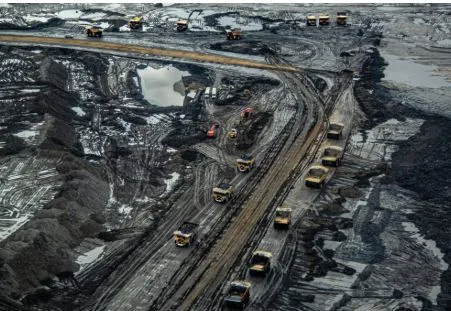
Now I'd like everyone to realize what it means to extract coal, gas and oil, so I made this nice Fossil Fuel World Tour Photo Album 2025 👇
→ coal, oil and gas extraction in Germany, Australia, the US, India, China, Canada. Enjoy! 😍
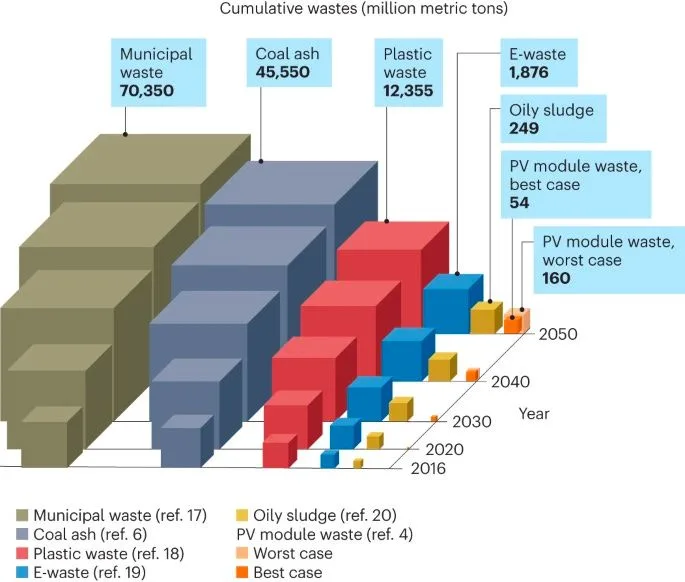
About waste, you can see also this beautiful graph, and you can compare the quantity of deadly waste produced by the coal industry, vs projections of solar panel wastes by 2050.
Coal industry waste vs projected solar panel waste by 2050.
We analyse visits anonymously to measure audience statistics on this site.